Sep 24, 2026Mahjong
Don’t Get Confused: There Are Two Major Types of Mahjong — Competitive & American Social Mahjong
competitive tournament mahjong and American social mahjong are essentially two distinct games.
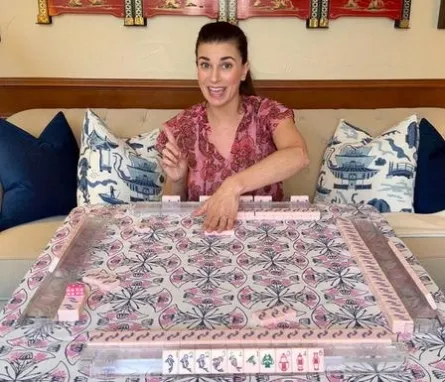
Most people assume mahjong is a single universal game. If you have watched international tournaments and casual American home gatherings, however, you will quickly realize a striking truth: competitive tournament mahjong and American social mahjong are essentially two distinct games. Despite sharing the same tile-based origin and basic four-player setup, they differ drastically in rules, core logic, gameplay goals and cultural positioning. Mixing them up will leave new players confused and unable to follow either table.
1. Core Positioning: Strategic Competition vs. Casual Social Gathering
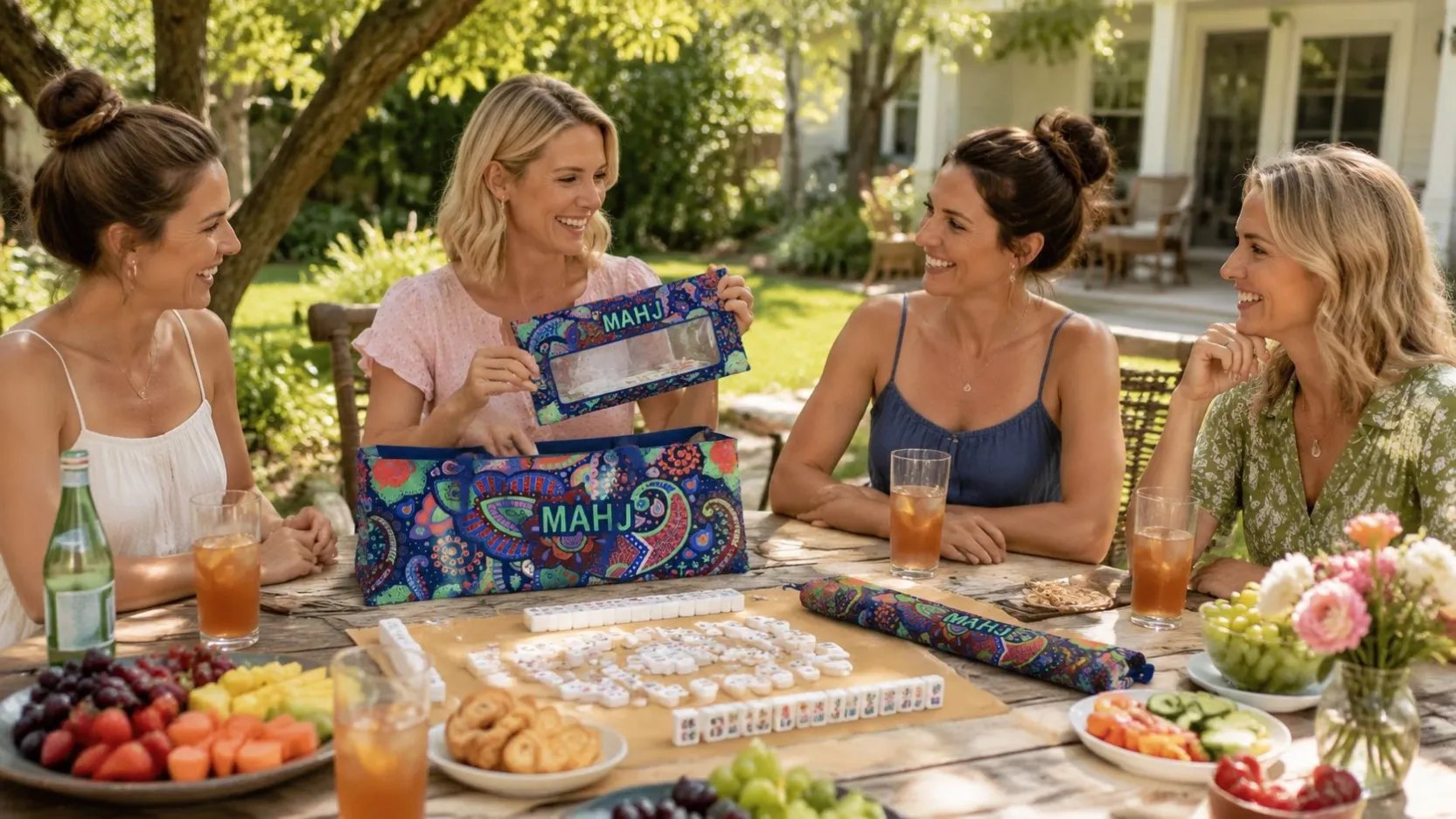
The fundamental gap between the two versions lies in their design purposes.Global competitive mahjong (including official Chinese competitive mahjong, Japanese Riichi mahjong and international tournament rules) is built for fair competition, strategic depth and balanced scoring. It serves as a professional mind sport. Every rule is standardized globally to ensure impartiality for official tournaments, rankings and professional matches. The core fun lies in tactical judgment, risk control, opponent reading and flexible tile combination.American social mahjong, governed by the National Mah Jongg League (NMJL), is designed purely for leisure, communication and community bonding. Born from American women’s social gatherings in the 1930s, it prioritizes relaxed interaction over fierce competition. The game pace is slow and conversational, allowing players to chat freely while playing. Victory and scoring are secondary; the core value lies in casual social entertainment.
2. Tile Setup & Unique Game Mechanisms
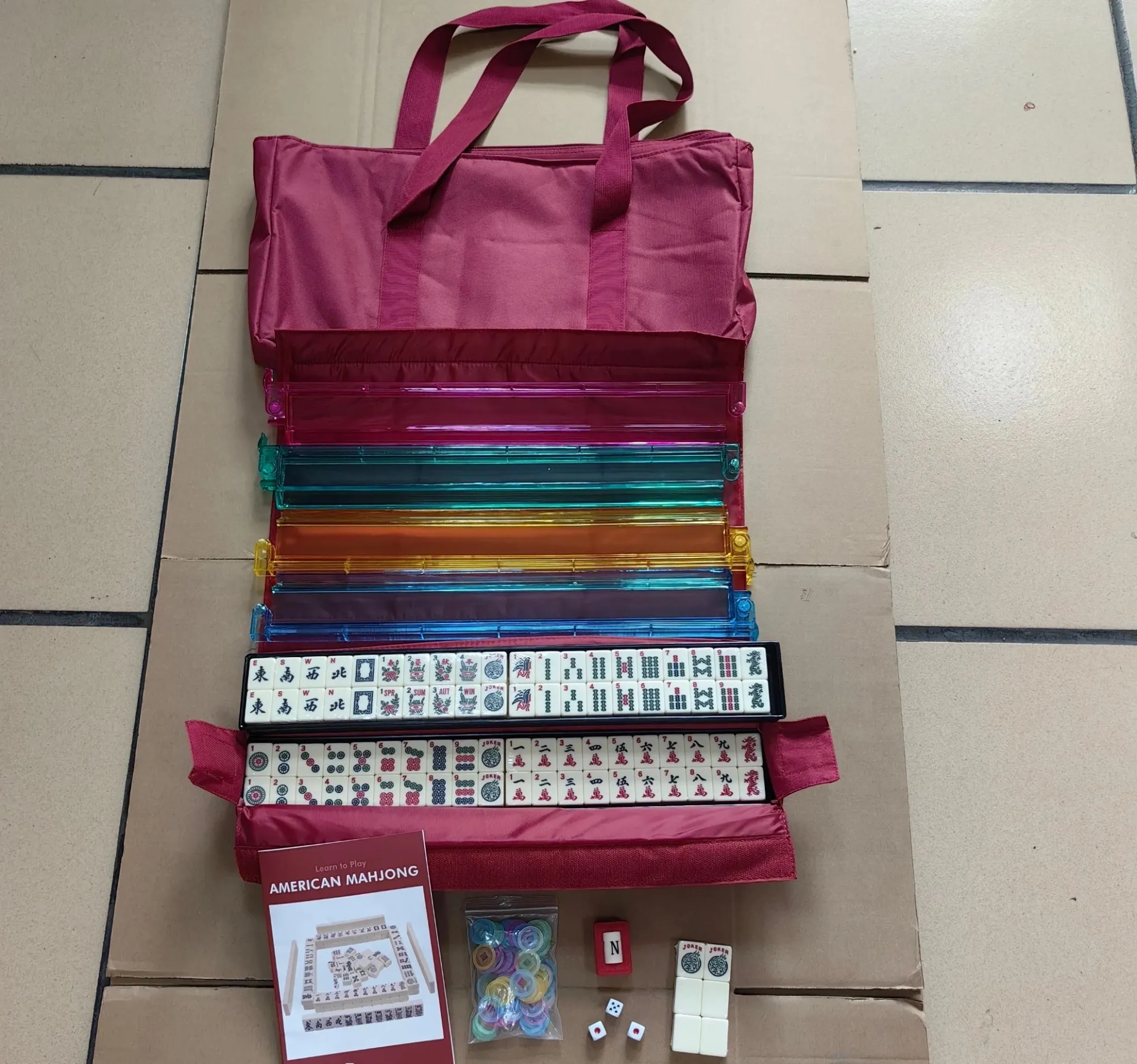
The tile configuration and pre-game rituals are the most intuitive differences between the two variants.Competitive mahjong uses a standard set of 144 tiles without any wildcard tiles. All winning hands follow a fixed and universal tile-combination logic, with stable rules that never change yearly. Players can flexibly form valid hands through drawing, discarding, pong and kong, adapting to various in-game situations.American mahjong adopts an expanded 152-tile set, adding 8 exclusive Joker wild tiles that can substitute for most regular tiles to complete triplets or quads. Notably, Jokers cannot be used for pair formations, forming a unique restrictive rule exclusive to American mahjong. Besides wild tiles, it features the iconic Charleston tile-passing ritual before each round, a structured tile exchange process that does not exist in any competitive mahjong system.
3. Winning Rules: Flexible Strategy vs. Fixed Annual Patterns
This is the biggest difference that separates the two mahjong systems.Competitive mahjong follows a flexible and open hand-building system. As long as players comply with basic combination frameworks and tournament-specific valid patterns, they can create winning hands dynamically based on tile draws and table situations. The strategy lies in flexible adjustment, situational judgment and precise probability calculation, bringing diverse and changeable gameplay.American social mahjong abandons flexible combination entirely. All valid winning hands must strictly match the fixed patterns on the annual NMJL official card. The league updates nearly 50–60 legal hand combinations every year, meaning veteran players need to relearn new rules annually. There is no random hand-building; players must lock their strategies around the current year’s official card, focusing on pattern recognition and preset hand planning rather than on-the-spot tactical changes.
4. Gameplay Logic & Player Experience
Competitive mahjong is a typical skill-based mind sport. It emphasizes tile efficiency, defensive judgment and opponent analysis. Every discard and draw affects the overall situation. Players need to balance offense and defense, predict opponents’ hand trends, and adjust strategies in real time. The gaming atmosphere is focused and rigorous, suitable for players who pursue strategic depth and competitive fun.American mahjong is pattern-oriented and rule-fixed. It cancels the “chi” tile-calling rule in traditional mahjong, simplifying in-game operations. Its gameplay focuses on memorizing annual patterns and reasonably using Joker tiles and Charleston tile passing to complete preset hands. The gaming atmosphere is relaxed and casual, with no intense confrontation or tactical suppression. It is designed for casual gatherings rather than competitive confrontation.
5. Scoring System & Development Orientation
Competitive mahjong adopts scientific and hierarchical scoring systems with complete multiple and coefficient rules. Different hand patterns correspond to different scores, with transparent and fair judgment standards. This mature scoring system supports professional tournaments, global rankings and standardized referee rules, forming a complete industrial and competitive system.American mahjong scoring is simple and fixed, with point values preset for each pattern on the annual NMJL card. There are no complex multiple calculations or tactical scoring bonuses. Its rule updates focus on maintaining long-term freshness for casual players, rather than pursuing competitive balance and strategic depth.
Final Verdict: Two Excellent Mahjong Cultures
It is inappropriate to judge which version is better.Competitive mahjong represents the professional, strategic and sporty side of mahjong, carrying forward the classic tile logic and evolving into a global mind sport. American social mahjong is a localized cultural innovation, stripping off competitive intensity and retaining the social and leisure attributes of mahjong, becoming a classic social activity in American communities for nearly a century.Understanding the difference between the two allows global mahjong lovers to choose the right gameplay according to their needs: intense strategic competition for professional players, and relaxed pattern-based entertainment for casual social lovers.