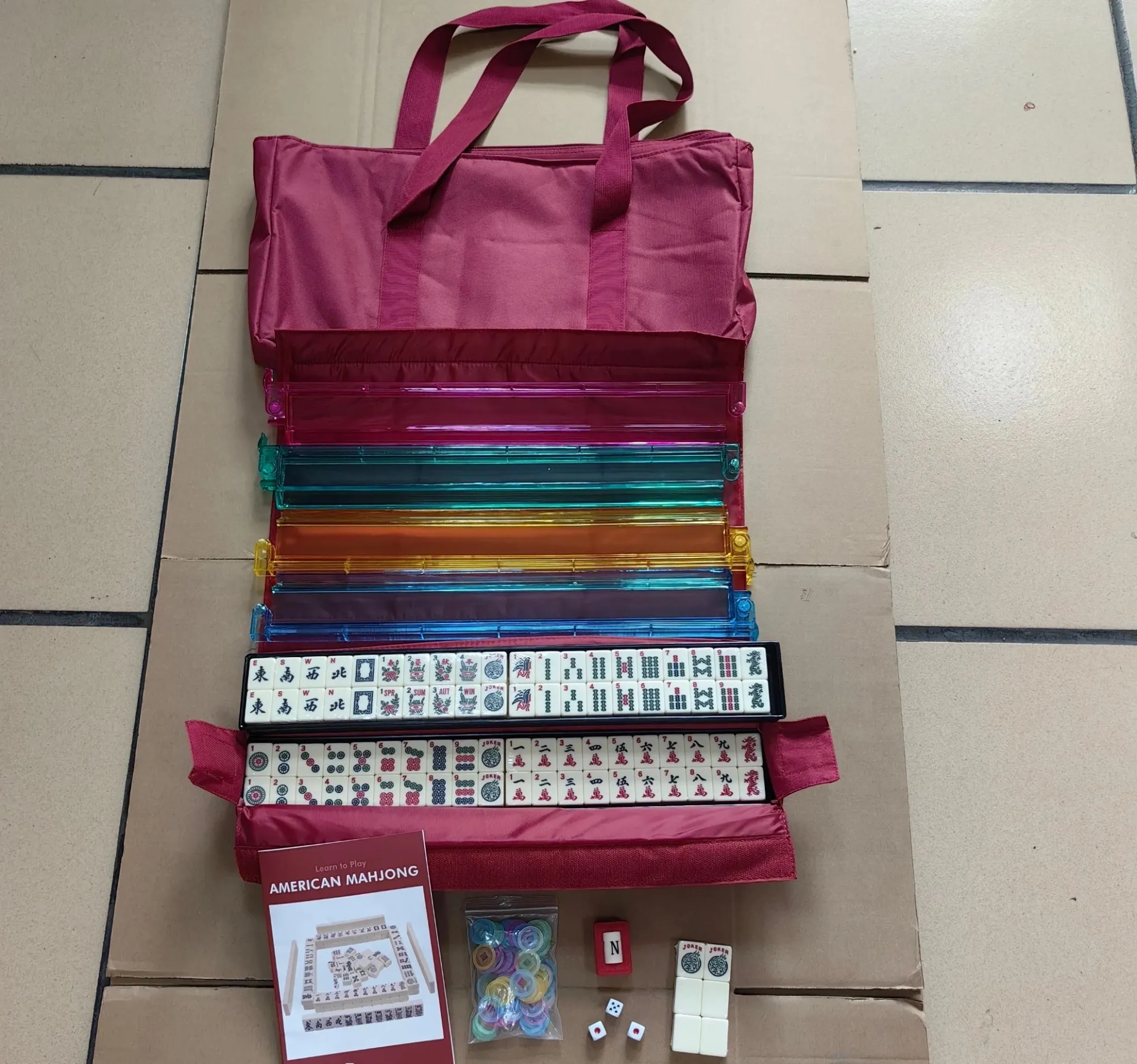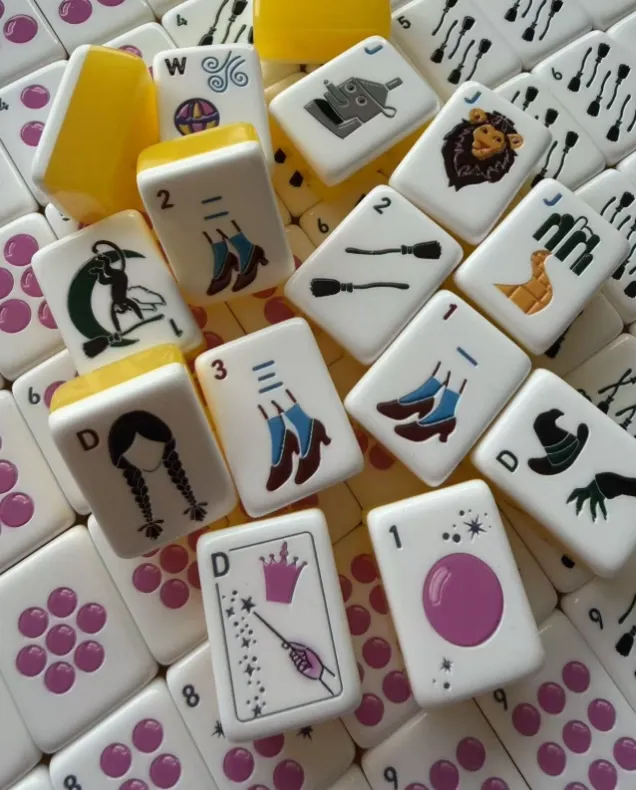
Sep 3, 2026Mahjong
Get to know yourMahjong tiles andsetup.
Before you begin, we’ll walk you through everything you need to know—from identifying the tiles to setting up the game.

From Tile‑Recognition to Full Game Setup: A Beginner’s Guide to American Mah‑jong
American Mah‑jong (Mah Jongg) is a popular four‑player table‑top game governed mainly by rules from the National Mah‑Jongg League (NMJL). Before you can start drawing, discarding and chasing winning hands, every new player must master two foundational skills: correctly identifying every tile in your 152‑tile set, and completing the full table setup step‑by‑step. This guide walks you through the whole process, from telling tiles apart to building walls, dealing tiles and preparing for official playAmerican M....
Part 1: Learn to Recognize All American Mah‑jong Tiles
A complete official American mah‑jong set contains 152 tiles, split into five main groups. Being able to quickly tell these categories apart saves you costly mistakes once the game begins.
1. Suit Tiles (108 tiles)
The three suits are Craks (Characters), Bams (Bamboos) and Dots (Circles).
- Each suit runs from number 1 to 9.
- Every number has four identical tiles.
- You can build sequences (chows), triplets (pungs) and pairs using suit tiles.
- Quick tip: The 1 Bam always shows a bird graphic, so do not mix it up with flower tiles.
2. Honor‑Wind Tiles (16 tiles)
Four wind tiles: East, South, West, North.
- Four copies of each wind.
- No numbers appear on wind tiles.
- Winds form pairs or triplets and are often required for high‑score hands listed on the NMJL yearly card.
3. Honor‑Dragon Tiles (12 tiles)
Three dragons: Red Dragon, Green Dragon, White Dragon (nicknamed “Soap”).
- Four copies of each dragon.
- Dragons cannot form sequences, only pairs or triplets. Many valuable winning‑hand patterns require dragon groups.
4. Flower Tiles (8 tiles)
American mah‑jong uses eight flower tiles (Four Seasons and Four Gentlemen).
- Flowers do not belong to any suit. They cannot form chows or pungs.
- When you draw a flower tile, place it face‑up on the table and draw one replacement tile from the wall. Flowers grant bonus points.
5. Joker Tiles (8 tiles)
The signature wild‑card tiles unique to American mah‑jong.
- Jokers substitute for almost any tile to complete pungs, kong or sequences.
- Restriction: You cannot use jokers to finish a pair, and some winning‑hand patterns limit joker quantity. Never pass jokers away during tile‑passing rounds.
Part 2: Required Equipment before Setting‑up the Table
Before building your game, gather all supplies:
- One full 152‑tile American mah‑jong tile set 2. Four tile racks for each player to hold their hidden hand 3. Two dice 4. Four copies of the current‑year NMJL winning‑hands card 5. Optional tile pushers to move wall sections easily
American mah‑jong always requires four players, sitting around a square‑shaped table.
Part 3: Step‑by‑Step Game‑Setup Procedure
Step 1: Shuffle all tiles (“Wash the tiles”)
Turn every single tile face‑down on the table surface. All four players move and mix the tiles together thoroughly. No tile faces should be visible during shuffling.
Step 2: Build the four‑sided tile wall
Each player takes 38 shuffled tiles and builds their own wall section:
- Place tiles face‑down, stacked two tiles high.
- Each wall segment is 19 stacks long (19 × 2 = 38 tiles).
- Push the four separate wall sections together to create a hollow square in the table’s center. This square wall will be your shared tile‑draw pile for the whole game.
Step 3: Choose East (the Dealer)
Every player rolls the two dice. The person with the highest total number becomes East (the dealer). Seating goes counter‑clockwise: East → South → West → North. East wins an advantage, starting the round with 14 tiles instead of 13 tiles. If East does not win the game, the dealer role passes counter‑clockwise to the next player for the next hand.
Step 4: Break the wall
East rolls the two dice again. Add the two numbers to get a total count. Starting counting stacks from the right‑hand end of East’s wall section, count forward the number of stacks equal to your dice total. Split the wall open at this stack. Lift those two tiles and place them on top of the wall segment just to the right of the break. The gap you created marks your starting‑point for dealing tiles.
Step 5: Deal tiles to every player
All players draw tiles counter‑clockwise, starting from the gap in the wall: 1. Three full rounds: Each player picks 4 tiles (2 stacks) every round. After three rounds, everyone holds 12 tiles. 2. One extra single tile is dealt to every player. Now South, West and North each have 13 tiles. 3. East draws one final extra tile, reaching 14 tiles.
Step 6: Arrange your tiles on racks
Every player puts their tiles on their rack, face‑inward so no opponent can see your hand. Sort tiles by suit, wind, dragon, flower and joker. Start checking possible winning patterns on your NMJL reference card.
Part 4: The Charleston (Mandatory Tile‑Passing Phase, before regular play)
Once dealing finishes, American mah‑jong begins with the Charleston, a unique tile‑exchange phase that does not exist in most Chinese mah‑jong variants. All passes are completed face‑down and simultaneously by every player: 1. First Charleston (required, three passes): - Pass 3 unwanted tiles to your right‑side neighbor - Pass 3 unwanted tiles to the player sitting across the table - Pass 3 unwanted tiles to your left‑side neighbor 2. Second Charleston (optional): Players may repeat the same three‑pass cycle. If one player says “No second”, the second Charleston is cancelled. 3. Optional Courtesy Pass: After Charleston rounds finish, two opposite players can choose to swap 1‑3 tiles, if both sides agree.
Part 5: Begin Official Game Play
After tile‑passing ends, East discards one tile face‑up in the center of the table. Play then proceeds counter‑clockwise. On each turn you: 1. Draw one new tile from the wall 2. Decide whether you keep it 3. Discard one tile face‑up and announce its name aloud Your main objective is to build a valid 14‑tile winning‑hand pattern shown on your NMJL yearly card. When you finish your winning combination, shout “Mah‑Jongg!” to win the round.
Final Tips for New Players
- Always keep your NMJL card visible during play. Valid winning‑hand patterns change every single year.
- Double‑check flower tiles and jokers so you never accidentally discard these valuable tiles.
- Do not rush the Charleston; pass tiles that do not match any hand patterns you intend to build.
Would you like a shorter marketing‑friendly version of this article, suitable to publish on your Facebook, Instagram or your GoGo Mahjong store website?